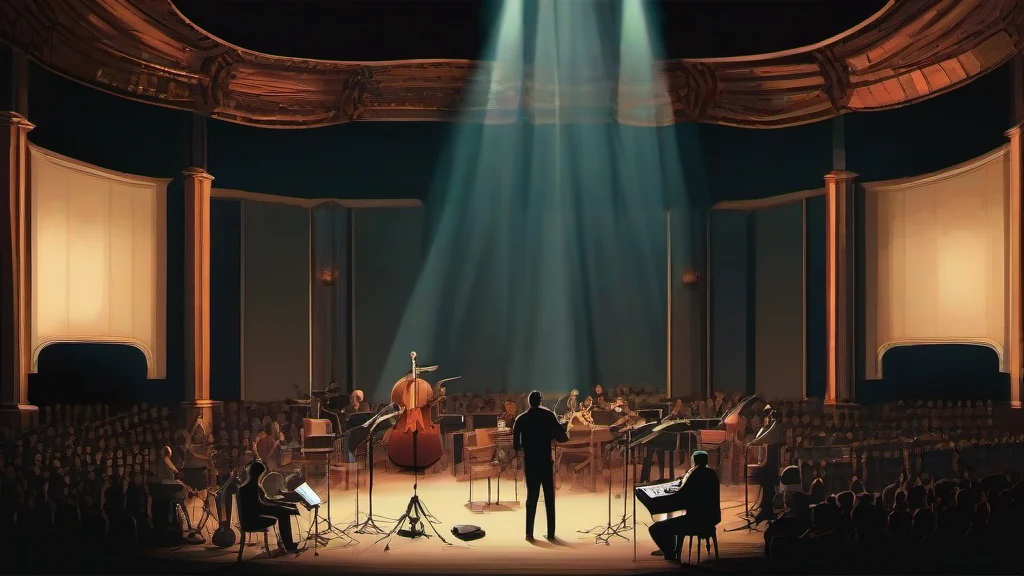
For just over an hour, the performers in “Dodô” lend their voices and bodies to brief scenes that are familiar yet strange. The fragmented, ensemble production builds and reshapes a language that is essential but fragile, often damaged or difficult to access.
The scenes emerge from impasses, fragments of memory and interrupted meaning, asking how identity and memory relate to speech. All the actors have aphasia, a degenerative condition that affects cognitive abilities, and are part of Ser em Cena, a theater project active since 2002. The work reaches beyond a therapeutic setting, using the performers’ experiences to shape an artistic exploration of language.
Directed by Elisa Band and Nicholas Wahba, “Dodô” draws on the aesthetic and philosophical world of Samuel Beckett. Its sparse action and hard-won scraps of dialogue are set against darkness and silence, while the performers’ words and movements are arranged with notable precision.
Beckett’s influence is visible in the production’s antiheroes, routines, empty conversations and resistance to forward momentum. Repetition sits alongside improvisation, stillness gives way to movement, and familiar expressions are twisted into comic, unsettling forms. The result also makes room for choreographed bodies, distinctive soundscapes and striking images.
The staging shifts between silent pauses and rapid speech, using accelerated monologues, sequences of voices and wordless movement. At times, the physical comedy evokes the relationship between Beckett’s theater and silent cinema. The carefully managed rhythm gives each performer space while revealing a shared drama.
“Dodô,” a name that refers to Didi and Gogo, the protagonists of “Waiting for Godot,” is moving without resorting to easy sentiment or instruction. Its scenes reflect on what it means to be made of words—and what happens when those words fail. The production’s emotional force comes not only from what is said, but also from the effort to speak and the silences around it.
Sources: Folha Ilustrada.